
heart in Biology
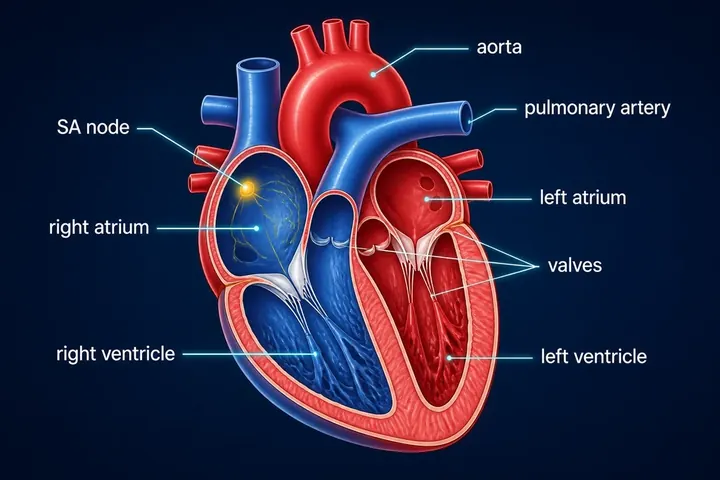
The muscular four-chambered organ that pumps blood through the blood vessels of the body.
The human heart has two atria and two ventricles. The right side pumps blood to the lungs, the left side pumps oxygen-rich blood to the whole body.
Meaning in your language
हृदय – चार कक्षों वाला पेशीय अंग जो रुधिर वाहिकाओं में रक्त पंप करता है
मानव हृदय में दो आलिंद और दो निलय होते हैं। दायाँ भाग रक्त को फेफड़ों में, बायाँ भाग ऑक्सीजनित रक्त को पूरे शरीर में पंप करता है।
القلب: عضو عضلي ذو أربع حجرات يضخ الدم في الأوعية الدموية
في قلب الإنسان أذينان وبطينان. يضخ الجانب الأيمن الدم إلى الرئتين، ويضخ الجانب الأيسر الدم الغني بالأكسجين إلى الجسم كله.
cœur : organe musculaire à quatre cavités qui pompe le sang dans les vaisseaux
Le cœur humain a deux oreillettes et deux ventricules. Le côté droit envoie le sang aux poumons, le côté gauche envoie le sang oxygéné à tout le corps.
jantung: organ berotot beruang empat yang memompa darah ke seluruh pembuluh darah
Jantung manusia memiliki dua serambi dan dua bilik. Sisi kanan memompa darah ke paru-paru, sisi kiri memompa darah kaya oksigen ke seluruh tubuh.
心脏:有四个腔、把血液泵入血管的肌肉器官
人的心脏有两个心房和两个心室。右侧把血液泵向肺,左侧把含氧丰富的血液泵向全身。
Examples
- The sino-atrial node in the right atrium starts each beat of the heart.
- During the exam his heart was racing, beating well above the normal 72 times a minute.
Everyday meaning
the organ in your chest that pumps blood; also the centre of feelings